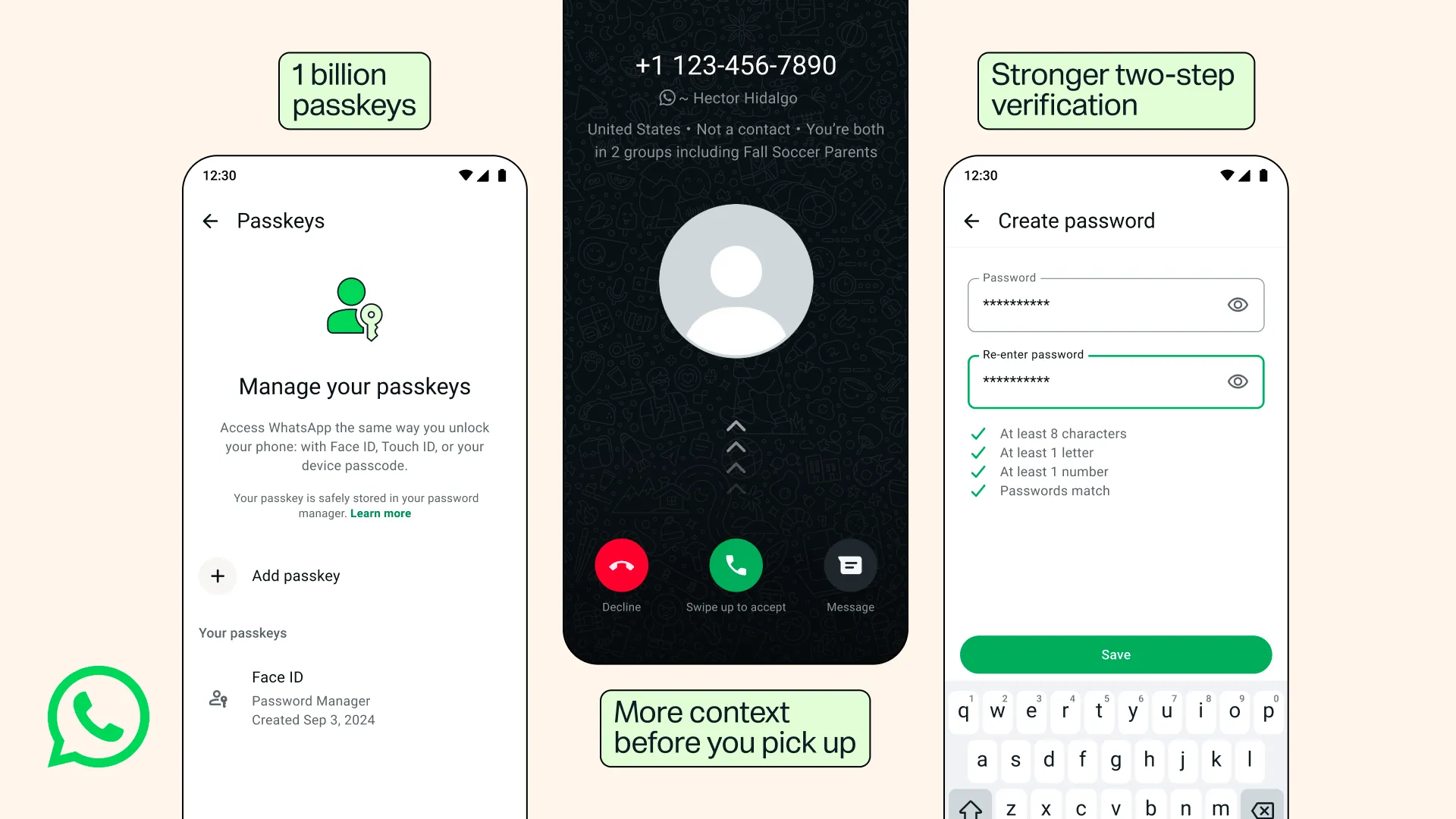
WhatsApp is rolling out three new security updates aimed at giving users stronger protection against account takeovers, making login easier with passkeys and providing more context when unknown callers reach them.
The updates are being introduced on Android and iOS, although some of the new caller information is specifically available to Android users.
The announcement comes as WhatsApp confirms that more than one billion people have already set up a passkey on their accounts.
You can now have multiple passkeys in your account
WhatsApp says more than one billion people have now added a passkey to their accounts.
Passkeys allow users to log back into WhatsApp using authentication methods already available on their devices, including a fingerprint, Face ID or screen lock code. This eliminates the need to enter a verification code or PIN when using the passkey.
WhatsApp is also introducing support for multiple passkeys on a single account.
This will be particularly useful for people who use both Android and iOS devices and want to have passkey access on each device.
Users can set up a passkey by going to Settings > Account > Passkeys in WhatsApp.
WhatsApp upgrades two-step verification
WhatsApp is also making its two-step verification system stronger by replacing the existing six-digit PIN with a full password.
Two-step verification provides an additional layer of protection designed to prevent someone from taking over an account even if they manage to obtain a user’s one-time passcode.
The new password can be longer than the previous six-digit PIN and can include letters, numbers and special characters, making it harder to guess.
WhatsApp is encouraging users to choose stronger passwords rather than relying on predictable combinations.
The company previously used a six-digit PIN for two-step verification, but the new system gives users greater flexibility when creating their security credentials.
Android users get more information about unknown callers
WhatsApp is also giving Android users additional information when they receive a call from someone who is not saved in their contacts.
Users will be able to see whether the caller’s number is from a different country and whether they have any WhatsApp groups in common with the caller.
The additional context is designed to help users make a more informed decision before answering an unfamiliar call.
WhatsApp says scammers often rely on urgency to pressure people into responding immediately. Showing more information about an unknown caller gives users an opportunity to assess the situation before picking up.
For instance, an unfamiliar number from another country with no shared groups could provide an additional reason for a user to be cautious.