WhatsApp is introducing four new features designed to make group chats easier to manage, particularly for people who belong to several active groups where hundreds of messages can accumulate in a short period. The updates address some of the platform’s longstanding group chat frustrations, including losing important information in lengthy conversations, struggling to catch up after being away and having to scroll through multiple unread messages to find conversations that actually require your attention.
The new features include the ability to pin messages indefinitely, share recent message history with people who have already joined a group, post status updates specifically for group members and filter unread conversations where someone has mentioned or directly replied to you. WhatsApp says the changes are part of its continued effort to improve group conversations, although it has not provided specific rollout timelines or regional availability details for all the features.
WhatsApp Now Lets You Pin Messages Indefinitely
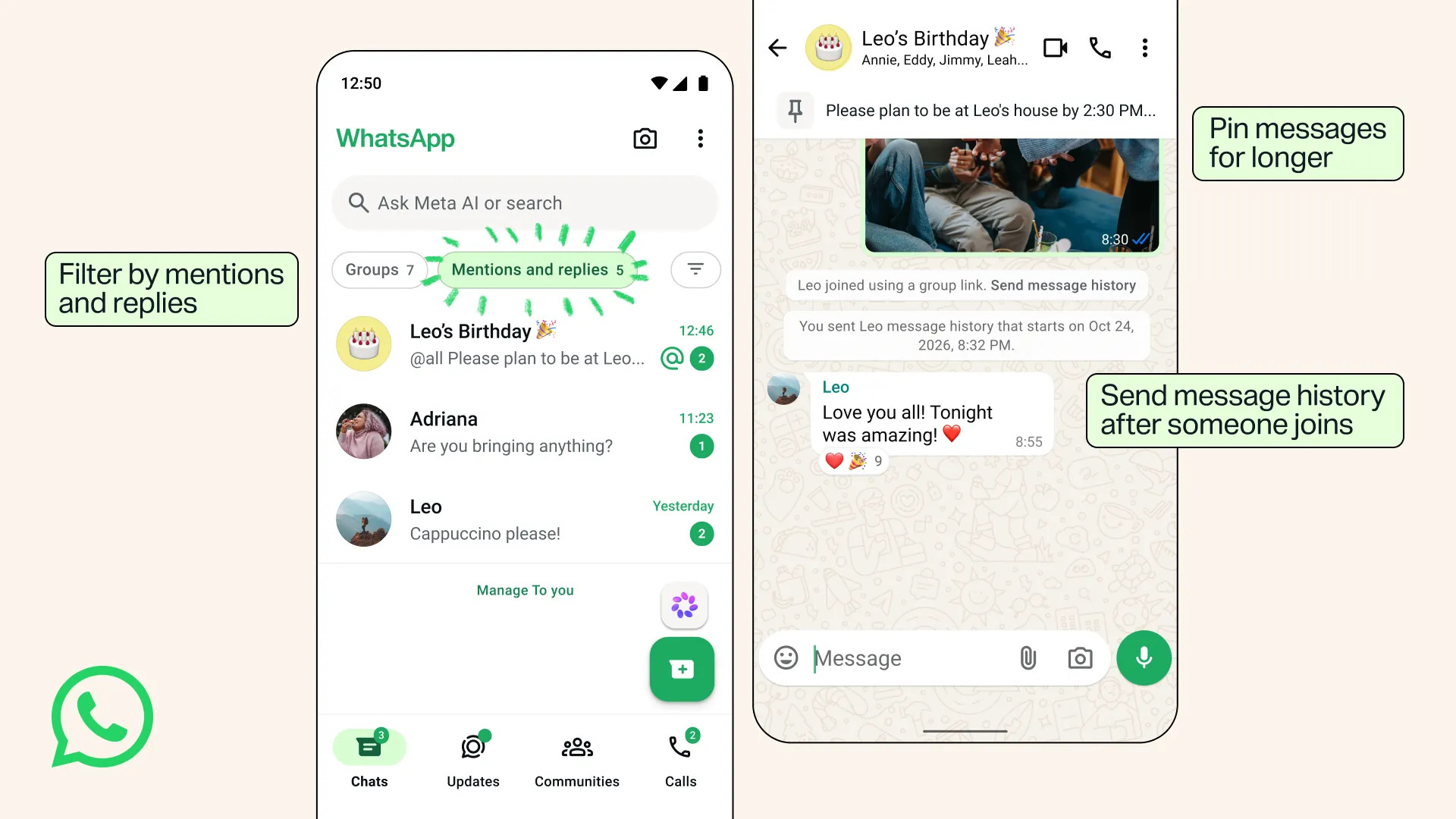
WhatsApp is expanding its message-pinning functionality by giving users the option to keep important messages pinned permanently rather than having to select an expiry period. Previously, when pinning a message, users had to choose between three durations: 24 hours, seven days or 30 days. This meant that even messages containing information that members might need to reference several months later would eventually disappear from the pinned section, requiring someone to pin them again.
With the new option, users can choose to keep a message pinned indefinitely without worrying about it expiring. This should be particularly useful for large groups where members regularly need to refer to important information such as payment instructions, meeting details, event dates, group rules or other announcements. Instead of repeatedly pinning the same information, administrators and members can leave it accessible for as long as it remains relevant.
You Can Now Share Message History With People Already in a Group
WhatsApp is also making it easier to bring people up to speed when they join existing group conversations. Earlier this year, the company introduced an option that allowed users adding someone to a group to share recent message history, giving new members some context about conversations they had missed before joining. The person adding them could choose whether to share the recent messages or leave them out, but that decision had to be made during the process of adding the new member.
The latest update removes that limitation by allowing users to share recent messages with someone even after they have already joined the group. You can simply tap the person’s name in the group chat and share the recent message history, meaning you no longer have to forward individual messages or ask someone to scroll through the conversation to understand what has been happening. WhatsApp has also clarified that these shared messages remain end-to-end encrypted, just like other personal conversations on the platform.
WhatsApp Introduces Group Status Updates
Another addition is group status, which allows members to share temporary updates specifically with people in a particular WhatsApp group rather than having to share them with their entire Status audience. This addresses a fairly common problem with WhatsApp Status, where an update intended for one group of people might not necessarily be relevant to everyone else in your contacts. For instance, something you want to share with members of your running club might not be appropriate for a family group or your work colleagues.
With group status, members can share updates within the group, where everyone can view, react to and post their own status updates. Like regular WhatsApp Status posts, these updates disappear after 24 hours, making the feature suitable for casual conversations and temporary announcements. It also gives group members another way to interact without having to flood the main chat with photos, videos and other updates that might get buried among regular messages.
New WhatsApp Filter Shows Messages Where You Were Mentioned or Replied To
The final update is a new chat filter that should be particularly useful for anyone who belongs to several busy WhatsApp groups. Rather than opening every unread conversation and scrolling through messages to establish whether someone has addressed you, the new filter will highlight unread group conversations where you were either mentioned directly or received a reply to one of your messages. It also includes messages sent using the @all mention feature, which notifies everyone in a group rather than targeting an individual member.
The idea is to help users prioritise conversations that are more likely to require their attention, especially when they have been away from WhatsApp for several hours and return to dozens or hundreds of unread messages. Instead of working through every conversation chronologically, you can use the filter to identify groups where someone has specifically tried to get your attention.
WhatsApp Also Highlights Three Other Group Chat Features
Alongside the four new additions, WhatsApp has highlighted several existing features that users might not be taking full advantage of. These include the ability to reply privately to an individual in a group conversation, allowing you to continue a separate discussion without derailing the main conversation, as well as an option to disable multiple answers when creating polls. The latter is useful when you need members to settle on one definitive answer rather than selecting several options.
There are also member tags, which allow users to provide additional context about their identity or role within different groups. For example, someone could identify themselves as a parent in a school group or as a treasurer in a volunteer organisation, making it easier for other members to understand their role without having to ask. These additions, together with the four new features, show that WhatsApp is increasingly treating group chats as more than just spaces for exchanging messages, particularly as people use them to organise communities, workplaces, families and social activities.