Forgetting your password is one thing. Losing access to the phone or computer you normally use to sign in to your Google Account is another headache altogether.
Google now wants to give users another way out.
The company has introduced selfie video, a new sign-in option designed to help you regain access to your Google Account when you cannot use your usual sign-in method.
The idea is simple. Instead of relying entirely on a password, phone or other recovery method, you can use your face to prove that you are really you.
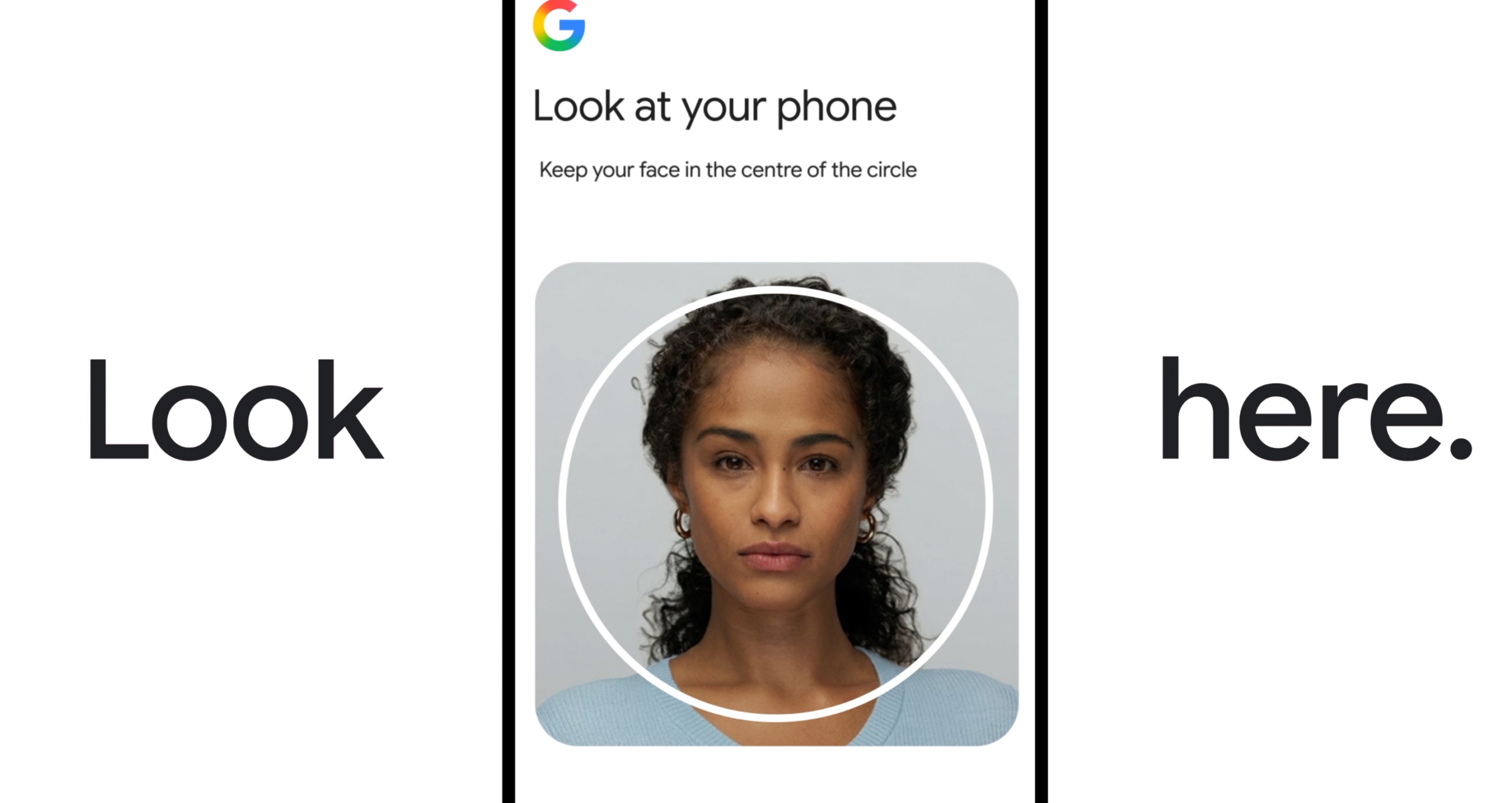
To set up the feature, you will need to look into your device’s camera and follow a few short, guided instructions that require you to move your head in different directions. This allows Google to capture your face from multiple angles in a short video.
Then comes the interesting part.
If you later find yourself locked out of your account or without access to your usual phone or computer, you can record another selfie video. Google will compare the new video with the selfie video you previously saved to determine whether the person trying to access the account is actually you.
But Google knows that simply asking someone to upload a video of their face is not enough in an age where artificial intelligence can generate increasingly convincing fake images and videos.
The company says its selfie sign-in system uses multiple layers of security to make impersonation attempts more difficult. The system checks the new video against the saved selfie and asks users to perform simple movements to help confirm that the video is live rather than a static image.
Google also says it uses its existing security systems to detect and help prevent suspicious attempts to access an account.
For users worried about privacy, Google says the selfie video is recorded and stored securely with the user’s consent. The video is encrypted while stored and can be deleted from the user’s Google Account at any time.
The company says the selfie video is used only to help users sign in unless they specifically choose to share it for other purposes.
The new feature is part of Google’s broader push to give people more flexible ways to access their accounts while reducing dependence on traditional passwords.
Google says users can check whether their accounts are eligible for the new selfie video option and set it up through its dedicated sign-in page.
Google Already Has Several Ways to Sign Into Your Account
The selfie video option joins a growing list of methods Google offers to help users access and recover their accounts.
The most familiar remains the traditional password, which continues to be used by millions of people to access Google services. However, passwords are increasingly being supplemented or replaced by newer authentication methods designed to make accounts both easier to access and harder for attackers to compromise.
One of the biggest developments is passkeys. Instead of typing a password, users can authenticate using the security features already built into their devices, such as a fingerprint, facial recognition or a device screen lock. Passkeys are designed to provide stronger protection against phishing because the authentication credentials are tied to the user’s device and the website or service they are accessing.
Google also supports two-step verification, which adds another layer of protection after a user enters their password. Depending on the account and settings, this can involve a prompt on a trusted device, an authentication app, a security key or other verification methods.
There are also recovery contacts, which Google has introduced as another way to help users regain access to their accounts. The idea is to give users an additional trusted person who can assist with account recovery if they become locked out.
The selfie video option is therefore not intended to replace every existing sign-in method. Instead, it gives users another option in situations where their usual method is unavailable.
That could prove particularly useful when someone loses access to their primary phone, cannot use their normal computer or simply finds themselves unable to complete the usual account recovery process.
The bigger picture is that signing into an online account is gradually moving beyond the traditional username-and-password combination. Passkeys, biometrics, trusted devices and now selfie video are all part of a broader shift towards authentication methods that can verify who you are without requiring you to remember another password.
With Google now adding selfie video to that mix, your face could become one more way to get back into the digital world when your usual keys to the door are missing.